← Author Hour

Rich Kurtzman

Rich Kurtzman: How Writing A Book Transformed His Business Abroad
September 29, 2025 · 28:58

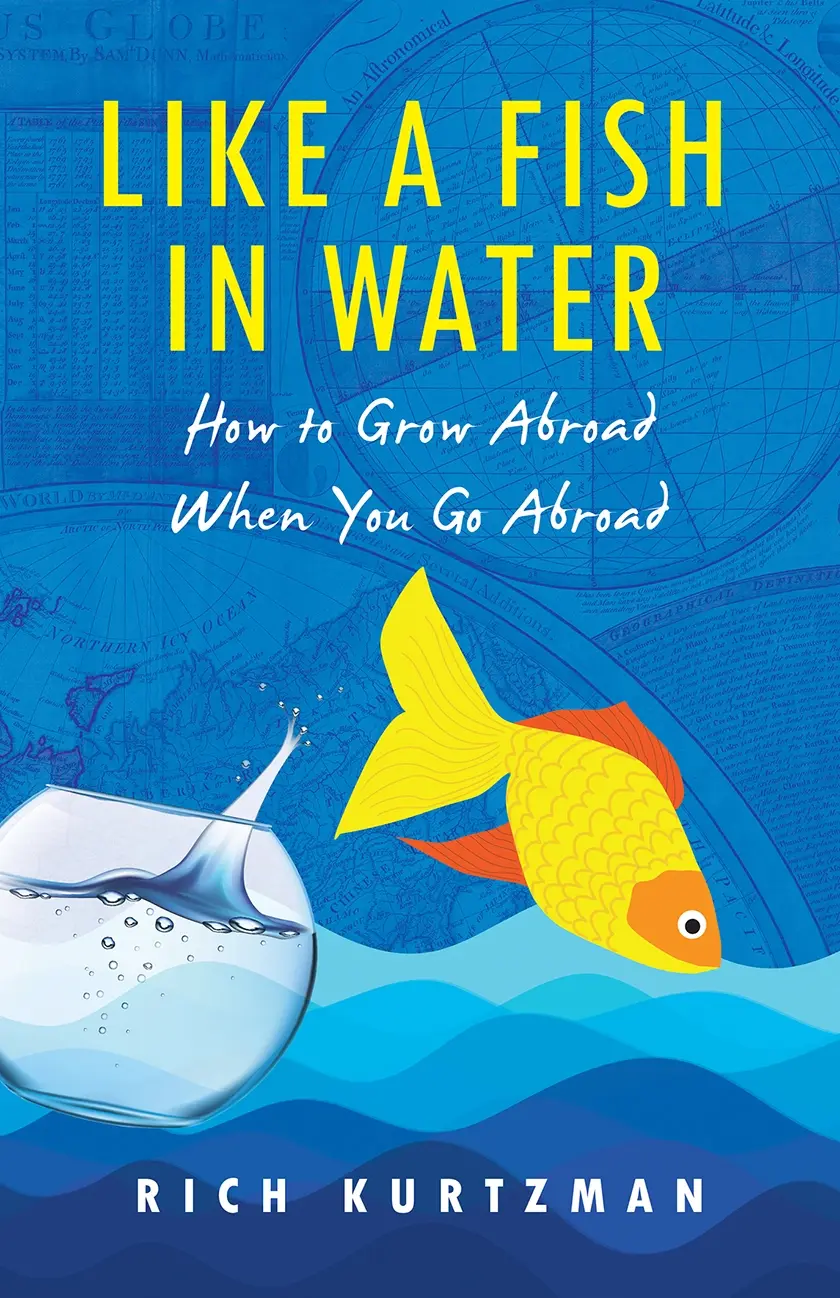
Join Rich Kurtzman, founder of Barcelona Study Abroad Experience and author of Like a Fish in the Water: How to Grow Abroad When You Go Abroad, as he shares how writing his book transformed his career, business, and impact. From his journey growing up in Chicago to building a life and company in Barcelona, Rich reveals how becoming an author opened unexpected doors—bulk book sales to universities, paid speaking gigs, and new opportunities to help students thrive abroad. If you're an aspiring

Transcript

Rich, I want to start a little bit about your background, and maybe that'll lead us into your decision to write a book. Yeah. So my background, let's see. Currently, I am sitting very close to Barcelona, where I live, and I've been living here for 23 years. But I grew up in Chicago, born in the suburbs of Chicago, grew up in Chicago, studied in central Illinois, never had a passport before I was 20 years old, and then decided to go study in St. Petersburg a summer between my sophomore and junior year.

And that just opened my eyes to the rest of the world and decided that I wanted more of this because I love languages. I realized I love traveling. So then I went back to college, took a semester to go study in Madrid, and fell in love with Spain, majored in Spanish and Russian. Not sure what you're ever going to do with that, but I just liked it, so I kept going with it. And I really just love studying. I really loved studying abroad, this idea that a student could go and open their horizons in another world.

And so I started working at Strata College. I got a job in Chicago with a big study abroad provider that sent students all over. My job was just to convince students to go study abroad and then help them before they went. So it's perfect for me. But I was really missing going abroad. So I took a semester, I took a summer off and led a group of high school students in Spain for three weeks. Loved it. Still wasn't enough. So I came back. I was working again. I took the next summer off, went to Milan, Italy for an internship for the summer.

Still didn't quite have enough. Following summer, went back to Spain with another group of students, leading them in a different part of Spain. And I was doing my master's degree at that point in Chicago. And the opportunity came up to move to Barcelona and start working here with that study abroad program. So I moved to Barcelona, dreams come true, and was working for them for about five years. Started doing some intercultural consulting. Started teaching for students abroad. And then in 2009, started my own company, basically my own study abroad company in Barcelona.

And here I am 16 years later, married to a woman who's from England. Our kids were both born in Spain. They are multicultural, multilingual and living the life. That's so cool. What an adventure. At kind of every step of the way. Yeah. It's fun. It's been incredible. And when I look back at it, it seems like kind of everything I've done has led up to this point. Maybe that's easier looking back on it. But again, what do you do with the Spanish and Russian double major? I don't know. I just kept following that.

Followed what I loved about study abroad and here I am. But as I say in the book, I didn't think that I would make it. In fact, after about five months, when I moved to Barcelona, I almost turned around and went back to Chicago and quit. I didn't give everything out. But spoiler alert, I didn't. I'm still here. And you've been building this company for, do you say 15 years, 16 years? This is our 16th year. That's right. Yeah. Wow. And what does the study abroad company do? So we bring students from the US, university students from the US to come study in Barcelona.

Maybe it's for a semester, maybe it's for a summer. Maybe it's just a short term program or an internship. And we help bring them over. We run the academics. We work with local universities and we do all the cultural integration. So we're making sure these students improve the language, get out of their comfort zones, meet local people, get to know the city, get to know about themselves while they're here. And have this experience that I had, which was open your eyes to new perspectives, see what else is out there in the world.

And, and then it's just such a rewarding, fantastic job to see, see students when I get there and then see the world. Yeah. Yeah. Yeah. Yeah. Yeah. Yeah. Yeah. Yeah. And when they go and the transformation, I still hear from students from 10, 15 years ago that say, I think about Barcelona every day. Still. It was such a big part of my life and my experience. That's so cool. That sounds like such a fun thing to do. So, so how did that, you know, 16 years in, how did the idea for a book come around and, and why was this the moment that you chose? The moment came a little bit because of COVID because as you can imagine during COVID, no students could travel.

So we had a big pause. We were, we were on, the company was just going up and up and then all of a sudden nothing. We sent hundreds of students home and then nobody could even come into Barcelona. So I had some time on my hands and I, at the time I was writing a cultural newsletter that was all about sharing tips and strategies for increasing cultural awareness. This is like what I love to do in my own life and what I do when I travel. And I give workshops a lot. I do a lot of talks on the same idea.

I was the intercultural consultant I did for executives. And so I had all this information and I worked for these great companies that people always said to me, why don't you write a book? Why don't you put it into a book? And typical, I don't have time for it. You know, I don't know how you start. Like how does somebody write a book? I don't even know. And then I thought, you know what? COVID came. Before that though, I talked to somebody who had worked with scrum and he said, yeah, I got this book.

He was. Yeah. My. Business coach said my book came out of the through scribe. So I looked it up and loves who everyone I talked to loved the process and the procedure. And the fact that they made me think from the first second that I could do this, cuz I never thought I could write a book. I have friends have written books. I just think, how do you, how do you do that? And then I talked to the people scribe and they made me think I could do it. And I did. That's awesome. I, that's what we do. We, we unlock the wisdom.

It's not, it's not easy. We, we, we just, we, we just have a lot of time in your head. You know, there's, there's so many people with such valuable things to share that, uh, it's, it's just hard work and it takes a, a thoughtful system and process to get it out. So, so what was the, what was the goal? What was the motivation to go through this experience? Cuz you know, it's, it's, it's not a small amount of work, even with a great, you know, great support system and a, and a team of experts. Yeah, it, it definitely was a lot of work.

My goals. There was no book on the market for students to study abroad. So my book is called like a fish in water, how to grow abroad when you go abroad. And it's aimed at the student, the student that's going to study abroad anywhere in the world and doesn't know where to start in terms of what am I going to get out of this? I saw too many students that came abroad and just skimmed across the surface and went away saying that was a great experience, but couldn't articulate what they got out of it.

Probably didn't make the most of it while they were there because they didn't know what to do. And I thought, or I feel like I had the information to help more students. So I love the fact with Scribe when they talked about the avatar, who is your audience? And probably like most first time authors, I said, oh, any student studying abroad. And they're like, no, no, no, no. You need to narrow it down, narrow it down, narrow it down. I love that. And having one person in your mind is your. And so my goal is for that, that one person.

And then obviously many people like them to go abroad and, and know how to get the most out of it before they go, while they're there. And then once they're done, how to use that experience to help them get a job, how to get them into those interviews and not just professionally, but personally as well, like how to use it for a better life. And so I also loved when. I'll probably say that sentence many times, but I loved how you all asked us, what is your champagne moment? Right? That one moment you're gonna be so excited to say this is worth it.

And then what are your other three goals? And in my champagne moment was the first university that buys copies for all students that are going abroad. And I expected it to happen hopefully within the first year. And it happened two months after I launched the book. Wow. The first university said we want to buy. Yeah. Yeah. Yeah. Yeah. Yeah. Yeah. Yeah. Yeah. Yeah. It wasn't a ton, but it was maybe, I think it was 75 copies for every student that was going to Rome. I thought, oh, that is so cool.

Right? These 75 students I don't know are going to hopefully get helped by my book. So my other goals. And then the shared experience, the shared language, because they're all working from the same thing. So they're sort of expecting the same thing from each other. And I'm sure it elevates the experience for everybody. Yeah. And that shared language is really what I've heard from schools that's been helpful. Mm-hmm. So. Yeah. I'll say that in a second, but my other goals were so to have more universities do the same thing, make it required reading.

And now there's about 10, at least 10 universities that are doing it or different institutions that are buying copies for everybody. My hope is to grow my business because of it. And that's a little bit harder to determine exactly. But every year since 2022, we've been growing. And just three months ago, the company was acquired by another company. So we were bought out. Mm-hmm. Mm-hmm. One of the things they really loved aside from our growth was our cultural integration. And the fact that I could say I wrote the book on study abroad.

And, you know, humbly, of course, it's not the only book that's out there for educators, but it was a book that people liked. And putting my name to that was really powerful. And then my other goal was to get paid speaking gigs because I'd been speaking a lot for free, for years. And I was like, well, I'm not going to do that. I'm going to do it for free. I'm going to do it for free. I'm going to do it for free. I'm going to do it for free. I'm going to do it for free. I'm going to do it for free.

I'm going to do it for free. But after the book, I started to get paid for it. So that's been exciting. That's incredible. We all share inside Scribe. We share the wins and the celebrations of the authors, like even many years after. And our team was commenting that it's been like you've had such a steady ramp up, right? Like even though you had this great run out of the gate with this university placing orders, your best sales months have come. You're a few, three, more than three years from publishing now? Just about three years.

Yeah. Yeah. Okay. And it's still, yeah, there's been peaks. There's been peaks throughout. But as of right now, I'm still talking to universities to buy. One university is looking to buy 400 copies for every student that goes abroad. And so, yeah, it's been, it was good out of the gate. And then there's just been peaks. And it's. It's still going. And honestly, I could do more marketing. I haven't. I'm thinking about writing a second version of the book pretty soon, which I think will get the word out there again.

But it's, yeah, it's been exciting. It's been fun. Other great things, aside from just numbers, of course, but a university would say that their orientations they would do for students before they went abroad were awkward silences. Students that didn't want to say anything. They'd ask about, you know, tell us something. How are you feeling? And nobody really said anything about it. And then they gave copies of my book and they had to read some of the first chapters. And they said, there's no more awkward silences.

The students now have the words to articulate what they're feeling. And they know that they're not alone. And they've got other students in there that are feeling the same thing. And so that's been really rewarding for me to say, wow, this is good. I know what it's like to sit in a room when there's awkward silences. And I know what it's like to give them some activities that help them. Yeah, that's really cool. So was there in the creative process, like a lot of times authors come in with this about to make this mistake of like putting everything they know in one book or or as you mentioned, like not having a super, super specific avatar that you're writing to.

How did you sort of navigate that creative process? What was what was your kind of biggest challenge or creative crossroads as you work through your book? I navigated by getting support. I'm the scribe team. When I was going through my cohort, we had weekly calls that were optional. And I was there every single week, getting all the help that I could get from from the cohort or from the people that were helping me. And I did what you all told me to do, which is it's kind of like one foot in front of the other 250 words a day.

Just do that. Tell me the questions. So I navigated by making a lot of mistakes. I mean, I love that idea of the vomit draft. Yeah. If that's the way. Yeah. You're still pulling it, which is just right. Just get it out. Don't look back at it. Just get it all out. And, and that was really helpful to me. And it's so useful to think, okay, it doesn't have to be great coming out. Cause it wasn't, I wasn't a great writer and, but just like getting it out and then talking to the group and then practicing and practicing.

Obviously it got, it did get better and got better. So creative process was fun. It was challenging. It took a lot of hours, but, uh, I. I enjoyed working with a cohort and I enjoyed working with the people at scribe to help me through it and really, really leaning on them for as much support as I could get. Yeah. Did, did you, uh, change your relationship with the writing process as you worked through? I did. Yeah. Cause I didn't, uh, my writing was pretty non-existent before then my writing was emails or text messages and it's different.

Obviously we got to put it on a page and more of my content was workshops. So I was used to the spoken word in front of people getting audience feedback immediately, taking that, going with it. This is a different style, honestly, because somebody is sitting down and reading through it. So I, I had to learn that, but it was helpful. It was just helpful to lean on, like I said, the support that I had that, and as you go through it and my process, I think was like 15 months from start to book. That's, that's a long time to be working on something pretty much every day, a little bit.

But every day, hopefully you can get better at it. That's a, that's a pretty good timing though. You know, there's, there's plenty of people that takes, it takes years. So 15 months is pretty much what you'd expect for, you know, somebody who's not a writer writing their first book. That's great. I pushed myself hard knowing that COVID was that pause that I use. I took advantage of, and that was going to end soon. And the students would be coming back and my daytime job would be, would take a lot of my time.

So I really said, I got to get this out. Yeah. You may have mentioned some of these before, but I always think it's interesting. It's very hard to predict what exactly is going to happen when you have a book out in the world. But almost every author I talked to says these like unexplained good things start happening just because they've got like more surface area out there and people discover them and new opportunities arise and, or they're seen as a different threshold of expert and new sort of invitations appear.

What are some of the unexpected good things that have happened in the last couple of years? Whether you can. Trace them to your book directly or not. I think I can trace some of them directly to the book. I've made connections with really smart and creative people because of it. So people will know that I've read the book and they'll reach out to me. And then I get to go over to these conferences and speak at conferences. And there I get to meet people and get their feedback and learn from them and learn what they're doing.

And of course, everything in the book was not my own thing. And a lot of it came from other people. Yeah. Things I've learned. And so I'm constantly trying to learn from other people that can help me with, with the next thing and however it can help them. That's great. So I've made a lot of connections and it's pretty funny. Uh, I was at a conference recently and we were at the lunch break and I just sit down and I was just one of probably 3000 people there and sit now sit down at lunch and actually do you introduce yourselves? And then she, she looks at my name tag.

She goes, wait, wait, you're rich. I was like, oh, you're rich. I'm like, I'm Rich Kersman. And she was like, you're Rich Kersman. I was like, you're Rich Kersman. I'm like, you're Rich Kersman. I said, yeah. She said, I can't believe I'm sitting here next to you. We love your book. We give it to all of our students. And then her colleague comes and sits down and she says, do you know who this is? She's what? This is Rich Kersman from the fish book. She was like, oh my God. So it was like, I, it was very strange.

I felt like a mini tiny celebrity for about three seconds. But then we ended up talking. Okay. Okay. Okay. Okay. Okay. Okay. Okay. And then they're having some kind of conference together because they've taken my book and improved it with their own ideas there. And so it's just given me. I think it's given me an in to talk to a lot of people that maybe I wouldn't talk to otherwise. And I always enjoy that. And I think it, it's always helpful for me to learn from people that way. Yeah. I think there's something so cool about, I think generally trying to be famous is a bad goal for authors, but trying to be like famous in that way.

one room where your industry gathers is actually a totally reasonable goal and that's what will actually really change the trajectory of you know your life or your business is like being yeah deeply and widely known and respected among you know the peers in your industry yeah it's great in the the fame part of it obviously has sometimes maybe a negative connotation or it's it's not about being conceited and famous it's about being able to help more people right so when someone says i love your book it's because it's helping them do their job better and that makes me just feel really good and you know the the idea that somebody has an excuse to come up and talk to you is really helpful as well because you're at a big networking event and if you're not a networker the worst thing is opening up a conversation but this is a conversation starter immediately yeah well if you if someone has already spent those hours like with you with your ideas that you know that you have so much you know that you have so much in your head that you have so much in your head that you have so much in common this this book is like uh you know i describe it sometimes like a lighthouse like it gathers your people around you and you know you know even if it's people bonding over your book without you even there you're sort of participating in that ecosystem just by giving people this gathering point or this shared language yeah it's it's cool uh some schools are using it as a book club for their faculty as well or faculty that are leading their own programs will use it for their students that they're taking and they're probably they're experts in i don't know architecture or international business but might not know anything about uh intercultural competence or know much about intercultural communication so this helps give them some of that knowledge that they can use which feels good i think a lot of authors have this aspiration that you've done really well which is to reach out to organizations in your case universities but like to nail this sort of bulk sales or bulk sales plus speaking sort of relationship where you turn it into you know not just selling one book at a time through you know social media or something have you picked up any sort of tips or playbooks or like how do you approach that uh opening up a new relationship or deepening a relationship with an existing university i think it all goes back to who can you help with the book with the content of your book and thinking about who are the the i don't know if gatekeeper is the right word but who holds the key to a bigger audience and that was interesting with scribe we went back and forth a lot about who is my primary audience is it the student who's the who's the ultimate reader of the book probably or is it the universities that would be buying the book for them or is it the parents that want their their kids to have this book to go abroad and make the investment worth it and i think it's all of those answers but really to get the widest audience it is working with the universities so in my case study abroad offices or or maybe provosts or deans that say we're making this investment for students to study abroad we want to make the investment for students to study abroad and we want to make the investment for students to study abroad and we want to make the investment for students to study abroad and we want them to come back to campus as internationalized as possible having gotten as much out of this experience as possible so we're going to invest this little amount of money to give them the book and so i leveraged my contacts that i had through the company already i tried to do as much speaking as i could at conferences and throw in ideas from the book in there i did some i think you all gave me some suggestions like a bonus chapter if somebody signs up for my book i'm going to give them my newsletter then they get a bonus chapter from the book and a pdf and that gets them to say oh okay i like this let me see what the rest of it is like but yeah that that's helped spur more book sales of course because it's it's buying in bulk but but yeah the book sales like the numbers don't mean as much to me as like okay i know that these students that are going around the world have my book and that's that's just really neat for me to think about yeah it's a romantic thing for this book to be you know stuffed in a bag and carried around the world and you know know that it's the guidebook to this great adventure yeah i had one person only one i thought i was hoping there'd be more but one person randomly wrote to me and said your book helped me so much it wasn't a student it was a professional who had moved from the u.s to south africa and she said your book helped me get through the tough times helped me get to know more people and really take advantage of the time that i was there and that was awesome that was that was really cool yeah that's so awesome this is um it's a really interesting challenge to narrow down that you know who not just who is the specific reader and then who are the people that can help you reach it like if you write a book for the deans you're not helping the students necessarily but if you help the students well enough you're helping the dean do their job to help the students and so seeing all the way through that and and focusing ultimately on the reader and the transformation that everyone is really working together to get the book out there so i hope that was helpful for you all from mcها sure thank you very much so much intense 뜨 선물 of the zoom new global audience channel live I love it.

Okay. Do you have, as a now veteran author, what advice would you give somebody who's sort of approaching where you were five years ago, let's say, just like has made the decision to start a book or thinks that they want to start a book? What's your, you know, what would you advise your younger self there about making it through the journey? I would say that first you can do it. I know that sounds trite or sounds like Nike or something, but it's, again, it's this idea of, oh, it seems so out of reach.

But I suppose it's like, if you want to run a marathon and you get this, one of these training programs for six months, say, start by running two minutes today, and then you're going to make your way up. That's a little bit of what it felt like. Okay. Because they just say, I'm going to run a marathon. You can't get out there and just do it. You have to go step by step and slowly. And it helps if you have a coach along the way. So somebody that just wants to do it on their own, I would find it really tough.

I really loved having that cohort, really loved having the other authors at Scribe that were helping me out. And so I would say you have to really do what you all said, which was that 250 words a day, just sit down for the minimum of that. Okay. Okay. Okay. Okay. Okay. Okay. Okay. Okay. Okay. Okay. Okay. Okay. Okay. Okay. Okay. Okay. Okay. Okay. Okay. Okay. Okay. Okay. Okay. Okay. Okay. Okay. Okay. Okay. Okay. Okay. And that idea of the vomit draft, just get it out. It doesn't matter if it's good or not, because you'll go back and it'll be edited later on, but just get it out.

And then you'll see, wow, in a couple weeks, I've got 1,500 words, or I've just written 5,000 words this month. Okay. Now we're making progress. So celebrating the small progress along the way, and then eventually you get there. So that would be my advice. And also really what you guys said was, who are you going to help with this book? Who is that ultimate person? And then last, one thing that you all did with us in the workshop that was so good was explaining your fears out loud, talking about your fears, and then working through, is that actually a legitimate fear? Or is it something you really probably don't need to work? You really actually, that's okay.

You can set that aside. That was helpful too, because I think probably everyone doubts themselves. Yeah, it is a very interesting exercise in wrestling with what you think you know, and then having the courage to put that out there. I mean, it is this weird form of prestige arbitrage where a lot of people, know what it takes, have the ideas in their head that would go in their book, but so few people are actually willing to, one, do the work, but two, have the courage to put their ideas out there on paper in a way that others could judge them for.

And that takes this huge courage and this overcoming of these fears and processing the feelings and identifying, labeling. But if you stare that fear in the eyes, it tends to go away. It tends to be a mirage. And that's, it's a huge part of the process. And when you talk to the other people, everyone else has got that fear. And if they don't, then you probably wonder what's wrong with this person who thinks that they know everything and everyone's gonna love their book right away. But it's funny, even, you know, you talk to like somebody like Stephen King, who's written dozens and dozens of books, and the same thing is still there.

You know, it's creative work. You know, we are always egoic and somewhat fearful animals and building that muscle of overcoming that and putting yourself in an environment that makes it easier to overcome. That is really a super, super high leverage thing that can sort of get you through these rapids and onto the other side where the winds at your back and unexplained good things are happening to you all the time. Yeah. Yeah. And you can always say you've written a book. You can always say you've written a book, at least one.

And it sounds like you might have another one up your sleeve. I think so. I've definitely thought about it. Obviously business is kind of taking over again. So I jumped back into that and, but now I'm ready to, to do another, probably another version of this book. And there's, there's so many other, this is maybe unexpected as well that people have come to me and said, Oh, do you have a version of this book for educators? This is for the students. So I thought, okay, maybe I need an educator's guide to my book.

Do you have a pocket guide for this book? Cause my book's pretty long. It's 320 pages or so. So do you have one that's a little bit lighter? And so that I wasn't thinking about when it first came out, I haven't done the audio. I haven't done the audio book yet. So that's something I'm thinking about as well. That audio book is huge, man. I can't believe the, the percentage of sales was higher than I expected for my book in audio. And it just keeps going up. The, the share of audio book, especially for non-fiction stuff like this is, is unreal.

And some people just literally only listen to audio books. You know, if, if it book doesn't exist in their audible app, it doesn't even, it doesn't even register to them anymore. Right. Did you read it yourself? I did not. No, I, I, I, I didn't quite trust my performing skills. Yeah. It's a, it's a, it's an art and it's hard work. Yeah. Yeah. Yeah. Yeah. Well, that's the, yeah, that's something else that I've thought about too. And now the question is where to do that with my first longer book or with a shorter book.

And I haven't figured that out yet. Yeah. Well, lots of opportunities. Yeah. Yeah. And the confidence to say I've done it once and I think I can do it again. Yeah, it, it does. Uh, it becomes a little addicting though. The fear never totally goes away. That's right. That's right. That's right. Well, rich, thank you so much for taking the time to share your stories and your tips and your, uh, your experience. Um, I'm very proud that we played a role in, uh, helping you sort of export your brain to all these students all over the world.

And, uh, it, it, it says it sounds like such a fun job and such a fun world to be a part of. It is. It's a wonderful job. And thank you for all of your help in making it happen..

Want to Write Your Own Book?

Scribe has helped over 2,000 authors turn their expertise into published books.

Schedule a Free Consult