← Author Hour

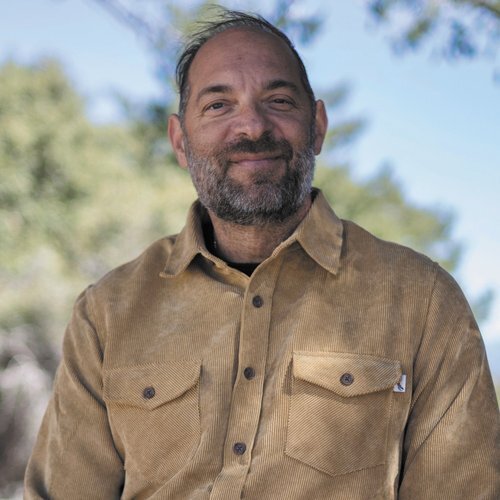
Adam Skolnick

Adam Skolnick: How "Can't Hurt Me" Led to "American Tiger"

November 04, 2025 · 43:22

Author and journalist Adam Skolnick—the writer who helped create David Goggins' bestselling memoir Can't Hurt Me—reveals the untold story behind one of the most influential books of the decade. Adam talks about his ghostwriting process, how Can't Hurt Me changed his career, and what led him to publish his own novel, American Tiger, with Scribe Media. Learn how Adam moved from ghostwriter to novelist, what he discovered about creative freedom and rejection, and why author-owned publishing is t

Transcript

Adam, it's a pleasure to talk to you on the record. I always enjoy when we get to chat, but it's good to be able to share with the world this time. Yeah, man. Happy to be here. Thanks for having me. Thank you for being such a... I feel like you're an inspirational story that we talk about often, at least in and around the scribe world. Because I think you're the epitome of a world-class ghostwriter in the sense that you're an amazing writer who can also really capture an author's voice. And I kind of want to start with, how do you do that? That's just such a different skill than being a good writer.

Hmm. I think it's just rooted in reporting. I've been a freelance journalist for a long time. And so I think I really... 20 years now, I've been doing that. And when I do any story, whether it's a short form or longer form, and with a subject, I just kind of let them talk and have long conversations. And I'm a tendency to over-research. So it's perfect for ghostwriting because I just like to talk to them forever and leave the recorder running. So I kind of view myself... Hmm. In ghostwriting, it's different than journalism.

In journalism, you have your own point of view, and you're kind of trying to fit it all together. But as a ghostwriter, my goal is to just be an open channel as much as I can and try to get out of the way as much as possible. And so then what that allows is for the author's story and voice to come first. And then if I can be additive in terms of just making it its best possible expression of what the author intends and wants, then I can do that. Hmm. Hmm. Hmm. Of course, that said, like, I've really haven't done it too much.

I've had two, I've worked with two, one, a swimmer in Mexico named Antonio Arguelles actually contacted me before David. And then when I got hooked up with David, and we started working together, Antonio kind of had to, his job waited until we finished with Can't Hurt Me. And so it came out after I actually had been contacted by him first. And since David, I haven't really found another person that can tell it the same way, because what David does is he's the master storyteller of his own story.

And so that makes it easy for someone with my strategy as an open channel. It makes it a lot easier. And you'd be surprised how, I mean, as you know, not everybody who wants to write a book actually knows what they want to write. They just, they have this idea of an outcome first. And that's not everybody, but that is kind of common that I've... run across. So, you know, that strategy I just described really is only going to be as good as the author and their idea and not just their idea, but their comfort, their comfort level and their skill in telling their own story.

Yeah, I mean, David is exceptional at that. And it was probably, I imagine there were a lot of crossroads where you're like, I don't have a lot of ways to improve on what you just said. Like, I could, I could overwrite, but I want to just verbatim use the way you just said. Yeah, yeah, no, I wasn't ever trying to improve. When you're writing a book and you're going from spoken word to book, there needs to be some more detail and there needs to be some connective tissue. And then you find ways that you can reflect back that and then discuss that, you know, but ultimately, it's not really ever about...

I try not to think of it as improving and more just like, how can I make it work the best in this format of a book? So that's kind of the only way I was thinking about it with David. But it took me a minute, like in our first versus our second, like the first time we worked together, it definitely took me, it was like a learning curve for me too, because I had never really done it before. And then the second time around, there was much more comfort, but we hadn't talked in a while. So it was just a matter of time for us to kind of get track again.

Yeah. Yeah, I think it's interesting because some books written by journalists just read like a series of articles. And I think you did such a good job, especially... Yeah. Yeah. Yeah. Yeah. Yeah. Yeah. Yeah. Yeah. Yeah. Yeah. Yeah. Yeah. Yeah. Yeah. Yeah. Yeah. Yeah. Yeah. Yeah. Yeah. Yeah. Yeah. Yeah. Yeah. Yeah. Yeah. Yeah. Yeah. Yeah. Yeah. Yeah. Yeah. Yeah. Yeah. Yeah. Yeah. Yeah. Yeah. Yeah. Yeah. Yeah. Yeah. Sometimes you return to the books there and there is like a great titles because that's a great piece of work.

Yeah. It's, yeah. So personally I was helping with like how I learned writing in the novel Competition Turbo. I really, really struggled with reading then onto like Salesforce I think. So sometimes colors and how he was able to do these things that seem impossible over and over and over and over again. That's right. And it's built this incredible following. So a lot of people who followed in his footsteps, now publishers are looking for books that are all takeaways and they minimize memoir. But he didn't have to do that because his memoir is so compelling and the takeaways are so built in.

But he always had, you know, the other thing I never before working with David, I never really thought of. I mean, it's not that I didn't care about the reader, but I didn't think that the best way to write a great book is to consider the reader. And he always considered the reader and proved and showed me, kind of taught me the strength of considering the reader. So I always thought creatively that might not be the best strategy, you know, sometimes, but it can work, you know, really can. I think it's interesting, like when that's good advice and when it's not.

Like creatively, maybe it's not, you know, Rick Rubin over and over again. His advice. It's just like, create for yourself. Don't think about the reader. But I think in a nonfiction sense, you know, I tell people all the time, like you need a very selfish reason to write a book and a very selfless reason. Like you need something that you're giving the reader and give them a reason to make it through this thing. You've got to be helping them in some way. It can't be purely self-indulgent, but you also need a selfish reason because writing a book is hard and time consuming and, you know, psychologically, logistically difficult.

So you need a selfish reason to make it all the way through that. It could be altruism. It could be financial. It could be emotional. Like, but. Yeah. You want to win-win between you. Yeah, I would. I would agree with Rick. Like, in no way were we trying to write to an audience in terms of giving them what they want to hear. But it was more like, what are they going to get out of it? And thinking like that. And then and then the creative kind of follows. Make sure that we have stuff for people to get out of it.

That makes sense. Yeah. OK, so that's a great segue, actually, between sort of nonfiction and creative work. Because I. I paint that whole picture and had you sort of give that background because I want to emphasize how successful how decades of successful journalism and ghostwriting and writing that you've had coming into the project that you have been working on recently, which is actually your debut novel and the journey that you've had towards not just writing it, but publishing it. So let's start with the like, what's the origin story of this novel? Have you always aspired to this? When did this? So like project sort of get conceived? Well, it's based on a true story that happened in 2005.

And I was I it was there was an escaped tiger in Simi Valley, which is a suburb of Los Angeles, about, you know, 50 minutes from L.A. in southeast Ventura County. And a tiger king type couple lost track of their animal and didn't tell anybody and was on the loose for weeks. It was on the loose for weeks before fishing. Wildlife knew it was out there. And then and then even. When they someone had seen it, the people who owned it had not wouldn't wouldn't would not admit they lost a tiger. So when that news story broke and they still couldn't find it, like days passed, they couldn't find it, couldn't find it.

And I finally messaged an editor of mine at L.A. Weekly. And I want it said, I want to go out there and follow around. Would you guys take a story? So I did. I covered it for the L.A. Weekly, spent a day out there embedded with the fish, fish and wildlife game wardens trying to find this cat. And they took me all around. And, you know, we didn't come close to finding the cat. They eventually did find it. But that so that story obviously is going to stay with you. But I didn't do anything with it right away.

You know, this was, like I said, in 2005. And it wasn't kind of front of mind. I wasn't thinking about that. I was working on another. I was thinking about a different novel, which is the first novel I wrote that that I did not publish. But that novel got me an agent, which got me the, you know, roundabout way, got me going in books. But this one. Kind of stayed with me. And I started thinking about it again in 2013 and thought, OK, that could be cool. If I ever come around to doing a novel again.

At that point, I was on my way in the nonfiction world. And I thought about it. And then COVID happened. And I've been collecting kind of information and pursuing, like, the case file. And I remember getting, like, writing the U.S. attorneys who were dealing with this case and trying to get the official case file. And they finally sent it to me. And it was like a joke. How many redactions? It was like a page with and and the and just black, just black pages. I'm like, why are you even sending me this? Like, you know, you felt like, are you protecting the tiger? It's a Tiger King story of it's crazy.

But and so at first I thought I'm going to write it kind of as it was and just try to fight because as a nonfiction first, try to find the story there. But over time, it just morphed and changed. And when I finally started writing in 2020. When I didn't have the file that I wanted, didn't couldn't get the information I wanted. It kind of pointed me way more into the fiction realm. And what it is, is it's a story of the game warden and his daughter and his daughter is the first to see the tiger. But nobody believes her because she's prone to exaggeration, has this wild imagination.

And so no one believes her, including her father. And over the course of these days, it becomes clear that maybe she's not lying this time. And it's a story about father daughter because he's a single dad. It's a story. It's a story of of the wildness in us and in our communities and in the world in general. And it's a and it's a tiger hunt. So those three things. A tiger hunt in urban L.A. In suburban L.A. That's right. In L.A. Yeah, yeah, yeah, yeah, yeah. It's like just a fantastic mix of like, you know, you've been on safari or something and you're like, have a sense of how exhilarating it is to like, you know, be in the wild and chase down and chase down an animal.

And I don't know. This is very. Very fun. What a. Thank you. Thank you. It's a it's a it's fun. It's exciting. And the same idea. Bring in a federal tracker and, you know, you try to find it. And what ends up happening is this this tiger is kind of an indicator species of the wildness in nature, the wildness that's running through our communities. L.A. is it is a California book. I think it's right to point out. It's like in Southern California, we're famous for our sprawl and we do have it. But, you know, contingent in that sprawl, that means we're sprawling over what? We're sprawling over the landscape.

But that means there's little rivers of mountains, little canyons. There's there's all sorts of cracks where nature can flourish. And it does here. And so, you know, there we're a biodiversity hotspot. And so people don't realize that because we have desert. We have coast. We have mountains. It all kind of comes together and converges. And because of that, we have this crazy range of species. And we do have big cats. You know, we have big cats around here. So it's kind of like an allegory about how we.

Tend with the natural world, how we try to hem it in and how we can't really deny it, though, whether we want to admit it or not. We are wild things, too. And we live in wild places, no matter how neat and tidy they might seem. I love it. I love it. Yeah. Especially that we're in denial of it most of the time. And the kids know the truth and they're trying to tell us to remind us. And we go on with our blinders. That's right. A hundred percent. They see it. They're they're playing. They're like out there playing.

They're playing. They're playing wild animals every day in their heads, you know? Yeah. Yeah. So what was the, you know, I was trying to capture in as much detail as I can. The sort of the publishing stories. Every author has this like maze that they go through where they're like, all right, I have a book idea or even, you know, I have a manuscript. And I have this complex and overwhelming set of options and opportunities to like get it out into the world and navigating all these tradeoffs. Then everybody has like, you know, sort of hopes and dreams and then trying to figure out like what they have.

What they actually want to do and what their goal is for this book. So tell me the story of the, you know, the manuscript, the marathon from manuscripts to like binding it out into the world and all the different sort of ideas and journeys you went on here. Right. Well, the writing of it was kind of the first challenge because, you know, when you're writing something that is personal in a way, but also includes so many things that are not of my direct experience other than the research that I gathered.

It took me a while before I was really. Happy with anything that I was writing about this, like 10 drafts. It took me 10 drafts to show anybody anything. But then you get to a point when you're writing any book where you feel like you're running downhill and it starts to really pick up momentum and it gets better and better and better. And so we got there and, but it wasn't an easy path. And so the way we went out, I have, I'm represented by an agent at UTA. And by the time we kind of first week, you know, my agent brought in an editor, an outside editor.

And. He, you know, he was really helpful. So, you know, the, he helped me kind of get it to another level. And then everyone, everyone at the agency was really stoked about it. Everyone was super optimistic. We went out and the major publishers, you know, kept saying no. And we went out a couple different waves and we went out everywhere that they could go. And we just were getting, we weren't just, we weren't getting there. It was surprising to me because to me, I feel like it's, it's as good as anything I've ever written.

And, but what I learned through that process is a couple things. One is. Hey, my success as a ghostwriter means nothing to these publishers when it's my own book, really? Well, almost nothing. It doesn't really translate and probably some of them don't even know who David is, which is crazy, you know? And so like, it just shows there's like a kind of an, an insider insular world in New York where kind of a lot of this is happening. This is not, not me trying to, to, to label anybody associated. Yeah.

In a certain way, but it did feel that way. And then the other thing was that I wrote a book that is kind of cross genre in a way. It was hard to pin down. It was hard to put in a box. And, and what we kept hearing was, I don't really like it. Don't know how to sell it. And so that to me was like, well, you just sell it as a great, you know, a great book, but, but they couldn't figure that out. Didn't fit their categories. And the way I found that out is in this mix of this, like trying to find a home for it.

I started to look at the blacklist. The blacklist is a famous screenwriting competition here in LA. It started these unproduced screenplays that were floating around in development. And I believe it's Franklin Leonard kind of put it together and said, let's do this competition of these supposed blacklisted screenplays. Obviously it's not really blacklisted, but let's get them. And he started to circulate them and they, and, and these winners came out and movies were made. And so he started to do that with fiction more recently.

And I looked at it thinking, should I enter this in there? And I looked at their website. Yeah. And I asked for the category of the book and I couldn't come up with a category. And so that's when I realized that, that it wasn't personal, but it was just, it's just the way this business works sometimes. And so that kind of set me on a more concrete path of finding my own way. And we were still in the mix with some indie publishers. So we were still in the mix with them, but their advances are so low, like five to $15,000 that it's almost, you know, if you don't need that money, if that money is not gonna help you.

And for me, it is, it's just, it wouldn't change my life at all. Then why give away, you know, 90% of your royalties. It doesn't make sense. And so having had the experience with David, although I wasn't involved in any of the publishing detail discussions, other than the editing process, I knew that, you know, who you guys were. And I started to look around for, for other options. And the funny part about all that was in that whole period of time where I couldn't find the publisher. There were all these other things happening in my, in my work life that weren't happening.

So like New York times sports desk shut down. That was one of my main platforms outside went through ownership change and the editors that I knew are no longer there. That's another one of my major platforms where I would kept kept publishing. So like nothing was working for me for like over a year. And it was just one of those weird fallow periods, which does happen to writers. And I'm not telling you, telling anybody that as like a poor me, that's just. Part of the business, but it doesn't feel that comfortable.

And as soon as I made the commitment to publish this book with scribe and go through you guys and just see it through, as soon as that contract was, was signed, everything else opened up, you know, everything, the work started flowing and somebody, even to the point of landing a nonfiction deal on another book with double day, which just happened in that. And that proposal was stalled out too. So nothing. Was happening. And then all of a sudden it's all happening. And so it's wild. So like, it, you know, it's, it's hard to put it all into words, like how weird it is.

Cause it, but just following it and believing in the story, I think, and then fighting away like the valve turned. That's incredible. It's, it's so interesting to like unpack that. Cause there's so many things. It's a big ball of art when you, when you have a book that you're taking out there, cause you know, you, you just wrote this great post that I pulled a few. Quotes from. That I want to talk through kind of about this journey that you went through. I mean, you mentioned that there's like this category mismatch, but you also talked to the post about like, you know, you're also seeking this kind of validation.

Like there's a real, there's a real sense. And I think there's, there's a lot that the kind of the big five traditional publishers do to reinforce this, that like they are the, the anointers of the novelist or of the creative work and that there's like a stamp that they hold. And a. Prestige that's associated with it. And you said, I think the quote is someone told you this and it unblocked you. You'll find a way to publish your novel just as soon as you stop needing to be anointed as a novelist.

Yeah. That was Julie Pyatt. Who's rich roles, wife. And yeah, I was talking to her about her, about my frustrations and that's what she said. And that really opened it up because it was true. And you're seeking it because at first, like you can't do it without them. Like when you're kind of a scrapbook. You're like, you can't be younger writer or just doesn't, you don't have to be young, but you're like, if, if you need the money and that's the only business that out there doing it and you could get an advance and some of those advances can be, can, can change your life.

You know, it can. And so it becomes this thing that you seek. And the books, the books that you love were published by the New York publishing house or the big five. However, they're not all, not all imprints are New York, but the big five. So you want to be one of them. You know, you want to be, you want to emulate your heroes. I think you need to be one of them. So you want to be one of them. And, and you know, you have to be one of the heroes, which I talk about in that post as well. And my heroes always went nonfiction, fiction, nonfiction fiction.

Even when I started to do this novel, like my agent would always say, you know, fiction is tough. He'd always say it, he'd say it like all the time. And I didn't listen, you know, because I didn't want to believe it. And because I thought I could write something bulletproof, that was always my kind of thing. All these things were happening. All these changes in publishing were happening. I figured I could write something bulletproof. And that was always my goal. But I didn't because I didn't write to a category.

And I realized that trying to write something bulletproof without thinking about category made it not bulletproof from their perspective. But at the same time, what was happening were I was getting these crazy signs. Like it's almost I'm going to sound like quixotic here and people are going to think this guy's nuts. But in reality, there's a one-legged crow in my book. And I in American Tiger, I should say the title. And I wrote one-legged crow into the book, into the story. And then we moved house.

And some weeks later, April, my wife saw one-legged crow on our block. I'd never seen a one-legged crow before in the wild. And, you know, if you go out, you've all seen thousands of crows. You've probably never seen one. I didn't even know they existed. But here's a one-legged crow on our block. Then it's in our backyard. Then it's in our backyard every day for over a year. And there's more to that story. But like the point is, I'm getting those, but I'm seeing yeses. And I believed already in the story.

And I had other readers reading it. And everyone came back to me with positive things to say. And then I'm seeing it out there in the world with maybe I'm right. You know, maybe they're wrong. And so that's kind of where I came around. Once Julie said that, I realized, you know what? I don't care about what any of these people say about really anything. I didn't even know who they were. I didn't even know who they were until I see a submission list. I get their names. Then I'm looking them up. I mean, it's not like I'm some publishing insider.

Like, I mean, I've been doing this a long time, but I don't know the people who make these decisions. And they don't know me. And so why do I care what they say? And it's funny following that up. John Updike's letters were just published. And there was a great write-up of that in the New York Times recently by Dwight Garner, a great literary critic. And he highlights a quote. And I'm going to paraphrase. But basically. Two thirds into his career, his decorated career, his first ballot Hall of Fame career.

John Updike is angry about being rejected by New Yorker, where he's been working there for like 30 something years. And he he writes the fiction editor over there. And he says, my story is not any worse because you rejected it, nor would it be any better if you accepted it. And so that is kind of what we're all dealing with. Right. As writers trying to figure. Out that point. And it's harder to know where you stand on that gradient if you don't have experience. But I have experience. I've written books before.

I know when I've written something good. And will it be, you know, celebrated by readers? We'll see. But like, I wanted to give it a chance. Yeah. And it's we are very lucky, I think, to live in an era as as creatives where, you know, you can get all the nose you want, but no one can stop you. Like, you know, we we have the tools and the platforms. We have the tools and the platforms that anyone can enter the ring, you know, the great sort of meritocratic arena and put their book out there on even if it's just self published on Amazon, even if it's just on your website.

Like, there's a lot of great authors today that are household names that got their start by blogging, essentially, you know, zero dollar entry cost. And the market just, you know, the readers just recognize them for the excellence. And they sort of climb the stairs. No, no doubt about it. No doubt about it. I mean, there's a long list of incredible. People who started with self publishing. But it's interesting changing. Now, our bookstores are opening up like shelf space for independently published authors, often locally independent authors like that.

That's happening at the Barnes and Noble near me. And Patchett is doing that. You can see it at Parnassus Books in Nashville. There's all like Romans in L.A. is doing that, like more and more bookstores are opening up. I think that the last kind of vestige where they're not that are not open to this stuff or maybe literary critics. But everyone else, including booksellers, are opening up. It's vastly different than when Cantoripa came out. We can only be carried in in brick and mortar Amazon stores and Barnes and Noble.

And that was it. Like we didn't we weren't really. But now all these independent bookstores are leaning in. And so, I mean, even Politics and Prose, who's like a very much a very well established kind of one of the great indie bookstores in the country. They have their own indie press. They're trying to get people to read. They're trying to get people to read. They're trying to get people to read. They're trying to copy scribe. And so more and more, even Simon and Schuster has their own competitor to scribe now.

And so, like, the point is, is that it's becoming more and more accepted. It's almost like the last vestige of institutional media, mainstream media that hadn't been disrupted. And it was always a little bit disrupted. There were already these small presses. There already were people doing this kind of stapling their own books together thing for a long time. But until until scribe came along. There really wasn't anyone doing it at a certain level that shook the trees. And I think David's book. I mean, I don't really know, but I think David's book opened up a lot of eyes to a lot of people, including the big publishers and definitely bookstores and changed the dialogue.

And now I'm sure you know that there's more competitors than you had before, but that's only opening up the market more and more. So, yeah, I think the the trend is definitely very strongly in this direction. And you can always tell kind of where people are on the spectrum based on like what they call. It you know, if it's like, oh, that's a vanity press. It's like, OK, that's like a 40 year old term that like the traditional publishers came up with to demean, you know, anybody who was publishing outside their, you know, onus of control.

But there's I mean, there's indie press, there's hybrid publishers, there's we refer to ourselves as a professional publisher. There's plenty of people just self publishing and there's tools to help people self publish. And I actually had a question for you on that because you had a yeah, you have a line in there that said there really is no such thing. As self publishing. And I wanted to understand what you meant by that. Well, I mean, I think a lot of people even consider what you guys do as self publishing.

And so I think that I know you don't because it is not. But but there's there's so many ways that a writer is never doing anything on their own. You're writing maybe the manuscript on your own. But if you're really trying to write something great, you have readers that help you. And then that's the kind of the first wave of assistance you get. And then you have an editor that helps you. And you have. You should have that. And that's another wave of assistance. And if you enter into an agreement with with scribe or any other hybrid publisher or whatever, or like these other professional publishers that are out there, then you're getting introduced to copy editors and you're getting people helping you with your cover and designers and and someone like Ellie, who's just Ellie Cole is an amazing kind of project manager.

And you're dealing with them and you're getting people to blurb your book. There's there's no way to create. There's no way to create a book at the level that you guys created that that that that David's books are at that this book is that on your own. It's impossible. And so I think vanity press has changed to self publishing. People consider it self published. People will consider this self published. People asked me, oh, so you're self publishing. And I don't it's not that I'm I'm not I'm not trying to deflect or or in any way embarrassed that I'm help.

I'm publishing under my own steam. It's just the way it's happening. It's not how I drew it up, but it's it's definitely the way it's going. And I'm proud of it. But at the same time, it's not self. I'm not doing it alone. It's every bit as professional as my experience with Crown when I published one breath, if not better. You know, the crown has legendary copy editors that have been there for years. That's the only thing I think that, you know, if you if you get lucky and land with one of these kind of old head copy editors or someone who's been around and has worked on all these copies.

Yeah. And has worked on all these number of great books, you're going to get that kind of institutional knowledge. But otherwise, in terms of hustle, in terms of of availability, in terms of just communication, this is this is far and away a different experience than you know, you're not you're not a little fish in a pond. You're like you're you're right at the fulcrum and you're answering every question. And I got to design my own cover, really, like I got to hand you guys the cover that would never happen for the major publishers.

Never. I mean, maybe you'd have to be really established in a kind of a big author to design to tell them this is the cover. It just doesn't happen. And so the ability to do that, to choose your fonts, the all the countless decisions you never had to make before you can make through this process. And and and what comes out is something that's even more personal, even even I think even more refined. And you can't do it alone, but you have more influence with the people that you're working with. Yeah.

Yeah. That's a great way to put it. I think. That's something I'm quite proud of is the the level of creative control that we give we give authors. I mean, you know, the summary of the whole system is like 100% creative, legal and financial control of your book. And what that actually results in is a bunch of authors making a much wider variety of decisions than a publisher would make for them. Who's trying to fit categories and, you know, the precedent set in those categories. And so you end up with like this really interesting range of of a wider variety of projects, higher variants.

And we're just really upfront and upfront. And honest about the fact that, you know, the author is always the CEO of the book. That is true. Even if you go to a traditional publisher, you're just a CEO with, you know, a majority controlling owner in that case. But like you use the term in your in your post about this book, like I didn't set out to become a publisher. And I now find myself as sort of a reluctant entrepreneur who's like shouldering, like confronting the fact that I'm shouldering the burden for making this book successful.

And that was always true. But like now I'm staring that truth in the face and you're like energized to like go to work and make it happen and make it bigger than it ever was and prove that this book is as good as you know it is. Yeah, totally. I mean, you know, it's it's fun to talk about now because it's inspiring me now. But like the the idea was that that I I've always shied away from trying to be a new media person. Like I always kind of like I think going back to your question. About being validated.

I just liked to contribute to stories in the tributaries that were already existed because number one, you just have more of an impact. You have more readers. And for a long time that was the case. It's actually no longer the case, right? As we know, podcasts are bigger than television. You know, like some of the biggest podcasts are bigger than anything on television. And so we know that's true from downloads from the numbers. And so from kind of Joe Rogan's ascendancy to now. Yeah. Like all that has been changing and changing and changing.

And this is most now the big publishers. What they want is they want to see your following that you built up before. And so for me to think, well, you know what if I kind of if I kind of put myself into their tributary and sail my ship down their tributary. I'm going to have more and more readers that way. And I can have a bigger voice. In reality, that's not the case. And I was kind of lagging behind in in becoming that entrepreneur. So, so, but that's what I'm trying to do. in becoming that entrepreneurial person or being more expressive of my process.

And now I'm realizing that that's kind of the way forward and it has been the way forward for a while. And I was kind of in denial of it. And this process is kind of opening up for me to show me. And the other thing it's doing is, it's not like I'm done writing books. Like I said, I have another book project I'm into now and I'll write another novel and all that stuff. And so if you don't put your book out, then you don't get to practice putting a book out. Then you don't get any better at selling your books or figuring out a way to get your connecting with readers.

And so that was the other thing is like, I wanted to go out there and have this experience again. And so this is me having the experience. Now I have my goals. I have my numbers that I wanna hit. I wanna be profitable and I want to, beyond that, wanna reach a certain number of readers. And so we'll see if we accomplish our goals or how many of those goals we accomplish, but we're driven to do it, you know? And we'll see how far we get. Yeah. Yeah. I like the idea of practicing putting a book out.

You know, it's viewing your career as a snowball. And it is true that I think it's a little easier to like compound that, those assets of audience and readership and stuff publicly when you're doing a little more directly rather than, you know, relying on the institutional memory to remember that you, you know, showed up and worked with them before. Cause those people might not be there anymore. Yeah. And that institution might not, might've changed. Absolutely. What else have you, you know, that sort of suggests like a mindset shift or a strategy shift.

Have you changed anything else about like how you write, how often you write, the platforms you're building, anything like that kind of around this? Yeah. Yeah. Yeah. I mean, I joined Substack and I decided to kind of do that. And what, the way that happened is Elizabeth Gilbert asked me to be, to write on her Substack. And so I contributed to her Substack. And before doing that, obviously I needed to kind of get mine going. It was on my radar. I just, and I, I certainly had subscribed to Substack, to other people's Substacks, but I just didn't want to continue.

I didn't want to email a bunch of people. Like I've always been like trying to let other people, like I'm just not like a hard seller kind of guy. Right. So I haven't been, but I started this Substack. And what I found is that people, people need to hear it, you know, especially on Substack. They want to hear how you made it happen. Like they want, they want tips cause it's hard to make it as a writer. And so I have now, you know, literally decades of experience and, and I have other younger writers that I've helped out, you know, Kyle Tierman, who you guys have worked with is somebody that I talked to about process and writing.

And he's kind of, he and I connected years ago and we've just stayed friends. And I've had like Elizabeth Gilbert did for me for years. And I'm doing that and I could just do it on a wider level. So I'm, I think what I'm doing is just kind of talking more freely about the process that I always kind of kept to myself. And so that's a new strategy and that's happening on Substack. And then in terms of, you know, in terms of Instagram, I've always had a decent following on Instagram. It's getting, you know, from the Rich Roll podcast, it's got, it's grown, but now seeing what's, I'm finally getting strategic and seeing kind of what people want and starting to kind of deliver something and just tailor it to what people want instead of what interests me in that moment, which has always been the way it started.

Like when I started Instagram, I was a lonely planet author traveling all over the world. And it was really, there was no algorithm other than your picture is put up the second it goes. And whoever's online at that time sees your picture. And I didn't write any captions. All I did was put the picture up because I wanted to see, I wanted people to see what a lonely planet author sees in that moment. And I stayed with that strategy well beyond, like well beyond all of it, you know? And so I'm kind of shifting that a little bit, but I mean, ultimately, you know, I am who I am and that's going to still come through wherever I show up.

And I'm not trying to be too contrived about it anyway. Yeah. I love your Substack because, not every writer writes well on their Substack, you know, like they're not always sort of practicing the craft. Sometimes it's just updates. And you, even when you are writing an update about, you know, hey, this book is coming or here. So I made this decision. It's, it's prose and it's thoughtful and it's beautiful. And it's, you know, thought provoking. It's reflective. And I think that's, I highly recommend subscribing to Adam's Substack and I'll have to go check out your photos on Instagram.

Thanks, man. I'm doing more reels now. Yeah. You like the reels, right? Everyone wants the reels. Everyone wants the reels. Yeah. Just, yeah. Give me the, give me the slot machine of, of sound and color. Exactly. Crazy. I'm not on TikTok. That will not change. And I'm not on ChatGPT. Not yet. Not yet. No. ChatGPT is on you though. Yeah. They're probably all over me. I do. You know what? The one AI that I use on a regular basis is Otter AI for transcription. Yeah. Yeah. Is that a huge transcription benefit? All right, Adam.

Well, when is the book American Tiger releasing? This book? That book. December 2nd. December 2nd. December 2nd. It comes out in print and in ebook and then the audio. Hopefully that same day we're hustling on the last pickups this week and try to get the files to you guys so we can get it out in concert or at least like within a week or so of pub date. So that's the goal. And I read the audio kind of. And so that's another experience. And that's been really cool. Yeah. Yeah. Awesome. Thank you so much for writing this book, for taking the time to share, for sharing your journey as an author, you know, on Substack and here.

Thank you for choosing to subscribe and thank you for doubling down on yourself to like put awesome, fresh, creative work into the world, even though, you know, the stalwart powers that be tried to refuse you not to be deterred. That's right. They tried. But like, that's the, that's the parting shot, right? Like they, they don't get to have the final say anymore. And that's kudos to you guys and all the great work you do. And, and I don't think I fully realized that there was no such thing as self-publishing until working with you guys.

You know, I didn't really contemplate it. I didn't think about it, but working with you guys and seeing how many really like the whole team has been so impressive from start to finish. And it shows a level of professionalism that equals the majors. So that's, that's the main thing I want to get across because the books that are coming through the system are, they stand side by side, all of them. So that's in, in turn, in my experience, that's the case. Yeah. Thank you. That's, that means a lot. And it's an honor to, you know, to work with you and produce books like this and to sort of arm the rebels and be sure that nobody, nobody can get told no.

And I always, I tell every, every author and everybody who supports authors, like there's, it tends to be one name on the front of the book and about a hundred in the back. And that's, that's the way the industry works. But, you know, let's not forget that it takes a village to, to produce a great book, both as an author, knowing that you've got people to rely on. And as somebody that contributes to, to books, like you, you can be really proud to, to support that author and that vision and that work and just be, be listed in the back and know that you're in the credits.

That's it, man. Well, you're on the credits and it's good to be on the show with you and, and to spread the word because our, our, we're all out there writing. You got to keep writing and keep believing in yourself. And that's like, you guys make that possible. It's a big deal. I love it. I appreciate you. Thank you. Go buy American tiger, go subscribe to Adam and hopefully we'll see you on the next book. Awesome. We'll see you again. Take care..

Want to Write Your Own Book?

Scribe has helped over 2,000 authors turn their expertise into published books.

Schedule a Free Consult